By Cody Gustaveson, PhD — President and Clinical Director, Clinic Ovis
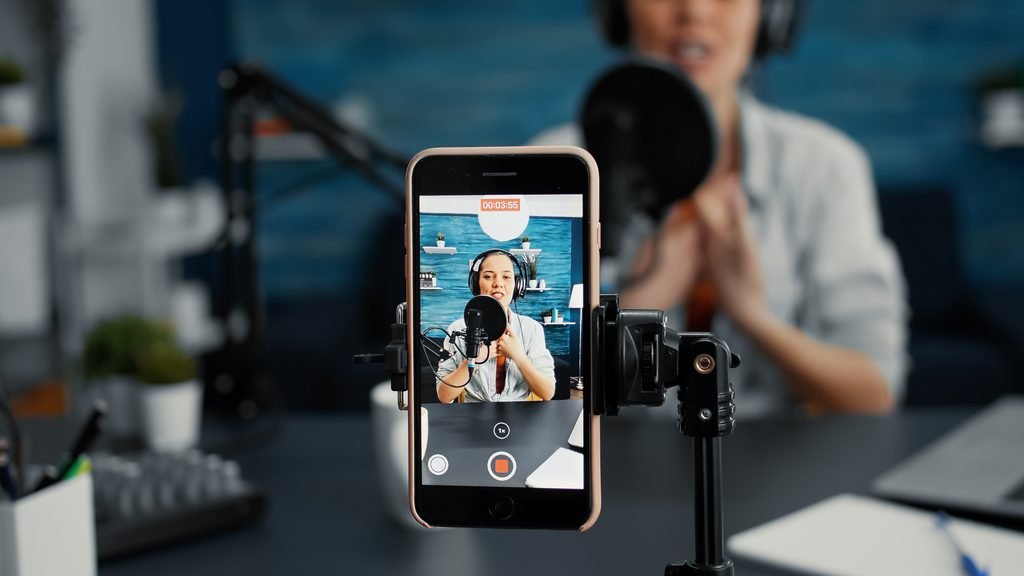
It usually starts late at night. You’re scrolling, and a stranger with a ring light tells you that if you overthink text messages, you probably have an anxious attachment style. The next video says procrastination is a trauma response. The one after that lists seven signs your partner is a narcissist, and you recognize four of them. By 1 a.m. you have three new labels, a supplement in your cart, and no clearer idea of what is actually going on or what to do about it.
I want to be fair before I’m critical. Social media has done real good for mental health. It has made it normal to say “I’m struggling” out loud. It has given people language for experiences they used to suffer through silently, and it has connected people who felt alone with others who understand. Plenty of the people who come through our doors first recognized themselves in something they saw online. That matters.
But awareness is not treatment, and a feed is not a therapist. As a psychologist who spends most of my week treating OCD, anxiety, and trauma, I see the downstream effects of pop psychology every day, and they are not all benign. Here is what I think people should know.
The accuracy problem is bigger than you think
This is not just clinicians grumbling about competition. When researchers have actually checked, the numbers are sobering.
In 2025, The Guardian took the 100 top videos under TikTok’s #mentalhealthtips hashtag and had psychologists, psychiatrists, and academics review them. They judged that 52 of the 100 contained some misinformation, and that many of the rest were vague or unhelpful. The examples ranged from the silly (eating an orange in the shower to calm anxiety) to the concerning (promises to heal trauma in under an hour, and content framing ordinary emotions as signs of borderline personality disorder or abuse).
An earlier peer-reviewed study in The Canadian Journal of Psychiatry found almost the same thing for ADHD: roughly half of the 100 most popular #adhd TikToks were misleading. Most of those misattributed common, nonspecific experiences like anxiety, mood swings, anger, and relationship conflict as if they were unique to ADHD. And not one of the misleading videos suggested viewers get an actual evaluation before concluding they had the condition.
That last point is the heart of it. Almost every symptom people see online is transdiagnostic, meaning it shows up across many conditions and in plenty of people with no condition at all. Trouble concentrating can come from ADHD, depression, anxiety, poor sleep, a thyroid problem, grief, or simply a stressful month. Sorting that out is the whole job of assessment, and it cannot be done by recognizing yourself in a list.
When everything is trauma, nothing is
Pop psychology runs on borrowed clinical vocabulary: trauma, gaslighting, narcissist, triggered, boundaries, toxic, dysregulated. These words have specific meanings. Online, they stretch until they cover almost any unpleasant experience. Psychologist Nick Haslam called this broader pattern “concept creep”: the gradual expansion of harm-related concepts until they include far milder experiences than they originally described.
This isn’t just a matter of vocabulary. Words shape how we interpret our own lives. If a disagreement becomes “gaslighting,” a normal bad mood becomes “dysregulation,” and a difficult childhood becomes the explanation for every current struggle, people can come to see themselves as more damaged and less capable than they actually are. It also dilutes the words for the people who need them most. When “trauma” means everything, it gets harder to take seriously the survivor for whom it means something very specific.
A label is not an explanation
There is real relief in a diagnosis. It says: this is not your fault, and you are not alone. Online communities organized around labels offer belonging, which is a genuine human need. But when a label is self-assigned from a video and then becomes an identity, a few things can go wrong.
First, the label may simply be wrong, and a wrong label points toward the wrong help. Second, identities are sticky. Once a diagnosis becomes part of who you are, evidence that you are improving can feel strangely threatening. Third, and most striking, symptoms themselves can spread socially. During the pandemic, clinics around the world saw a surge of teenagers with sudden tic-like behaviors, often after heavy exposure to tic content on TikTok. These were functional symptoms, real and distressing but distinct from Tourette syndrome, and a Boston Children’s Hospital follow-up found that most of the young people improved once pandemic isolation eased. The lesson is not that anyone was faking. It is that human minds are suggestible, and the content we absorb shapes what we experience.
A lot of viral advice makes anxiety worse
This is the part I see most often in my own work, and it is the part I most want people to hear.
Much of the most popular mental health content preaches some version of avoidance: protect your peace, cut out anything that triggers you, if it doesn’t feel right, don’t do it, you don’t owe anyone an explanation. Sometimes that is wise. But for anxiety disorders, OCD, and PTSD, avoidance is not the cure. It is the engine. Every time we steer around something that frightens us, the brain learns that it really was dangerous and that we really couldn’t have handled it. The fear grows. The world shrinks.
The treatments with the strongest evidence for these conditions, such as exposure and response prevention (ERP) for OCD and prolonged exposure or cognitive processing therapy for PTSD, work largely by helping people approach what they fear, gradually and with support, until the brain learns something new. That is hard, uncomfortable work, and it looks nothing like the soothing, validating content that performs well online.
For OCD specifically, social media can become part of the disorder itself. Searching for videos that confirm “this intrusive thought is normal” or “here’s how to know you’re not a bad person” feels helpful in the moment. Clinically, it is often reassurance-seeking, a compulsion that brings brief relief and then feeds the next round of doubt. Meanwhile, the casual “I’m so OCD” posts about tidy desks make it harder for people with the real condition to be recognized and taken seriously.
The algorithm is not your clinician
It helps to remember what these platforms are optimized for. They reward content that is emotional, certain, relatable, and short. Good clinical information tends to be none of those things. “It depends” and “let’s get more information first” don’t go viral. “This one sign means you have X” does.
There is also no credential required to post. Some creators are licensed professionals doing their best in a tough format. Many are not, and some are selling something: a course, a coaching program, a supplement, a paid community. The confidence of the delivery tells you nothing about the quality of the information.
What real care offers that content can’t
I am obviously biased, so let me be specific about the difference rather than just asserting it.
- Assessment. A trained clinician considers the full picture, rules out alternative explanations (including medical ones), and uses validated measures, not vibes. When the question is complicated, formal psychological testing can answer it with far more precision.
- Individualization. Your history, goals, values, and circumstances shape your treatment. A video speaks to millions of people at once and therefore to no one in particular.
- Evidence-based methods. Structured treatments like ERP, CBT, and ACT have been tested in controlled research. They are specific about what to do and in what order.
- Measurement and adjustment. Good therapy tracks whether you are actually getting better and changes course when you’re not.
- Accountability. Licensed clinicians are bound by ethics codes, confidentiality laws, and a licensing board. An influencer answers to an algorithm.
How to scroll smarter
I’m not going to tell you to delete your apps. Here are a few questions worth asking about any mental health content you come across:
- Who is this person, and how do they know? Look for a real license and relevant training, not just a personal story (valuable as those can be).
- Does it apply to everyone? Be wary of “if you do X, you have Y” and “everyone with Z does this.”
- Is it promising a quick fix? Real change usually takes weeks to months of consistent work.
- Is it telling you to avoid? If the advice is mostly about steering clear of discomfort, pause, especially if you struggle with anxiety or OCD.
- Is someone selling something? That doesn’t automatically make it wrong, but it should raise your bar.
- Does it encourage you to get evaluated? Responsible content points you toward professional help rather than replacing it.
- How do you feel after watching? If you come away more anxious, more certain something is wrong with you, or pulled to keep checking, that’s useful information.
The best way to use what you find online is as a starting point for a conversation, not the end of one. If a video made you wonder about ADHD, anxiety, OCD, or trauma, bring it to someone qualified to help you figure out what is really going on.
If you’re wondering what’s actually going on
At Clinic Ovis, we specialize in OCD, anxiety disorders, PTSD, medical anxiety, and comprehensive psychological testing. If something you’ve seen online resonated and you want a real answer, we’re happy to help. Contact us to schedule a consultation.
If you are in crisis or thinking about harming yourself, call or text 988 to reach the Suicide & Crisis Lifeline, or call 911.
Sources
- The Guardian, “More than half of top 100 mental health TikToks contain misinformation, study finds” (May 31, 2025), as summarized by the Business & Human Rights Resource Centre
- Yeung, A., Ng, E., & Abi-Jaoude, E. (2022). TikTok and attention-deficit/hyperactivity disorder: A cross-sectional study of social media content quality. The Canadian Journal of Psychiatry, 67(12), 899–906.
- Haslam, N. (2016). Concept creep: Psychology’s expanding concepts of harm and pathology. Psychological Inquiry, 27(1), 1–17.
- Time is ticking for TikTok tics: A retrospective follow-up study in the post-COVID-19 isolation era. Boston Children’s Hospital; Brain and Behavior (2024).
- Functional tic-like behaviors: From the COVID-19 pandemic to the post-pandemic era (systematic review).